Balance Sheet Example: A Founder's Guide to Reading One
Your balance sheet is a financial selfie of your business. Here's how to read one — with a real example and the three numbers that actually matter.

Balance Sheet Example: A Founder's Guide to Reading One
The Bottom Line (TL;DR)
- The balance sheet shows what your business owns (assets), what it owes (liabilities), and what's left for the owners (equity) — at one specific moment in time.
- The equation never breaks: Assets = Liabilities + Equity. If it does, something is wrong in your books.
- Assets are listed at historical cost, not market value — the balance sheet lies by design. Knowing its limits is part of reading it correctly.
- Three numbers to check every time you open it: current ratio, debt-to-equity, and the retained earnings trend.
What Is a Balance Sheet?
Picture this: Marcus runs a 12-person digital agency. His business is growing, his clients are happy, and his accountant just sent over the year-end financials. He opens the balance sheet, stares at it for 30 seconds, and closes the tab.
Sound familiar?
The balance sheet is the most ignored of the three financial statements — and the one with the most skeletons inside.
Here's what it actually is: a financial selfie. A snapshot of your company's financial position on one specific day. It answers three questions:
- What does the business own?
- What does it owe?
- What's left for the owners?
Assets, liabilities, equity. The whole thing fits on one page. Its official name is the statement of financial position — accounting's way of saying "here's where you stand, right now." Not last quarter. Not projections. Right now.
The Equation That Never Breaks
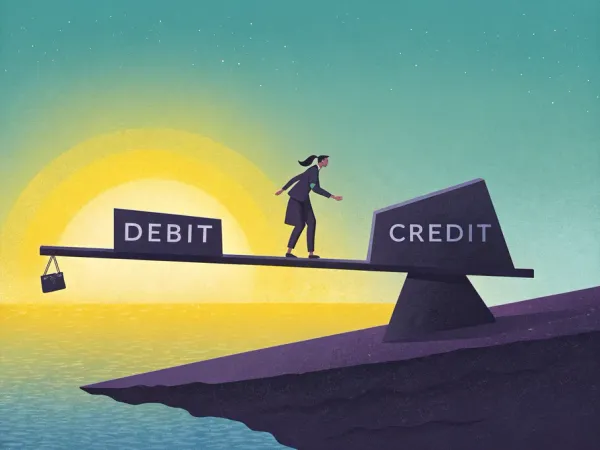
Assets = Liabilities + Equity
This is the foundation of double-entry accounting. It never, ever breaks. If your balance sheet doesn't balance, there is an error — in your books, in your software setup, or in whoever prepared the report.
What it's actually saying: everything your business owns was paid for by either borrowed money (liabilities) or the owners' own money (equity). There's no third source.
Take out a $50,000 loan to buy equipment: assets go up $50,000, liabilities go up $50,000. Still balanced.
Earn $10,000 in profit and keep it: assets go up $10,000, equity (retained earnings) goes up $10,000. Still balanced.
Every transaction in your business moves at least two lines on this equation. Always.
The Three Sections — What's Actually In There
Assets: What You Own
Assets are split into two groups.
Current assets — things you expect to convert to cash within 12 months:
- Cash and cash equivalents
- Accounts receivable (money customers owe you but haven't paid yet)
- Inventory
- Prepaid expenses (insurance or rent paid in advance)
Non-current assets — things that stick around longer than a year:
- Property, plant, and equipment (PP&E)
- Intangible assets: patents, trademarks, goodwill
- Long-term investments
They're listed top to bottom in order of liquidity. Cash first — it's already cash. Land last — good luck converting a warehouse to cash by Tuesday.
Here's the thing nobody explains clearly: assets are recorded at historical cost, not market value. That warehouse Marcus bought for $180,000 in 2018 might be worth $450,000 today. On his balance sheet, it shows up at $180,000 minus accumulated depreciation. The balance sheet tells you what you paid. Not what it's worth now. Keep that in your head every time you read one.
Liabilities: What You Owe
Current liabilities — due within 12 months:
- Accounts payable (what you owe suppliers)
- Short-term loans and credit lines
- Accrued expenses (wages earned but not yet paid, taxes owed)
- Deferred revenue (cash received for work not yet delivered)
Non-current liabilities — due beyond 12 months:
- Long-term loans
- Bonds payable
- Long-term lease obligations
You might be tempted to skip past the liabilities section. Don't. This is where the uncomfortable story lives. High current liabilities relative to current assets? You might struggle to pay your bills in the next 12 months. Much better to find that out from your balance sheet than from your supplier's collections call.
Equity: What's Left for the Owners
Equity is what remains after you subtract every liability from every asset. In plain English: the owners' stake.
For a corporation, the equity section typically includes:
- Common stock — par value of shares issued
- Additional paid-in capital — the premium investors paid above par
- Retained earnings — cumulative profits kept in the business
- Treasury stock — shares repurchased (shown as a negative)
For a sole proprietor: owner's capital plus or minus draws and profit. Simpler, same idea.
The retained earnings line is the one to watch. Growing year over year? The business is profitable and reinvesting. Shrinking, or negative? Losses, excessive distributions, or both are eating into the foundation.
A Real Balance Sheet: Marcus's Agency
Marcus Digital LLC, December 31, 2024:
| ASSETS | |
|---|---|
| Current Assets | |
| Cash | $31,000 |
| Accounts Receivable | $47,500 |
| Prepaid Expenses | $4,200 |
| Total Current Assets | $82,700 |
| Non-Current Assets | |
| Equipment & Computers (net) | $28,000 |
| TOTAL ASSETS | $110,700 |
| LIABILITIES & EQUITY | |
|---|---|
| Current Liabilities | |
| Accounts Payable | $8,400 |
| Accrued Payroll | $12,300 |
| Short-Term Loan | $15,000 |
| Total Current Liabilities | $35,700 |
| Non-Current Liabilities | |
| Long-Term Loan | $18,000 |
| Total Liabilities | $53,700 |
| Equity | |
| Owner's Capital | $25,000 |
| Retained Earnings | $32,000 |
| Total Equity | $57,000 |
| TOTAL LIABILITIES & EQUITY | $110,700 |
Check the equation: $110,700 = $53,700 + $57,000. ✓
Now let's read what this actually tells us.
Three Numbers to Check Every Time
1. Current Ratio
Current Ratio = Current Assets ÷ Current Liabilities
Marcus's: $82,700 ÷ $35,700 = 2.32
This is the short-term survival check. Can the business pay its bills over the next 12 months? Above 1.5 is generally comfortable. Below 1.0 means current liabilities exceed current assets — that's a cash flow problem that doesn't announce itself until it's already an emergency.
Marcus is at 2.32. He's fine. But that $47,500 in accounts receivable is worth watching. If clients are slow to pay, current assets shrink fast.
2. Debt-to-Equity Ratio
Debt-to-Equity = Total Liabilities ÷ Total Equity
Marcus's: $53,700 ÷ $57,000 = 0.94
Below 1.0 means equity is financing more of the business than debt. Marcus owns slightly more of his business than the bank does. Above 2.0 starts getting uncomfortable — the business is heavily leveraged and vulnerable to rate increases or revenue dips.
3. Retained Earnings Trend
Is the $32,000 growing year over year? If Marcus's retained earnings were $18,000 last year and $32,000 this year, the business is profitably reinvesting. If it went from $40,000 to $32,000, something chipped away at it — losses, excessive distributions, or both.
One number in isolation tells you nothing. The trend tells you the story.
What the Balance Sheet Won't Tell You
You might be thinking: if I read the balance sheet, I understand the business. Not quite.
What's missing:
- Whether the business is making money. The balance sheet is a snapshot, not a trend. You need the income statement.
- Whether cash is actually flowing. A profitable business can go broke. Check the cash flow statement.
- What assets are actually worth. Historical cost ≠ market value. Always.
- Future obligations. Pending lawsuits, operating leases, and contingent liabilities may not appear at all.
Read all three statements together. The balance sheet alone is a photograph. The three together are a film.
What This Does NOT Mean
- Total assets ≠ cash. Most assets are tied up in equipment, receivables, and prepaid expenses — not in the bank.
- High equity ≠ financial health. Equity can look strong while the business runs out of cash. They measure different things.
- A balanced sheet ≠ accurate books. Errors can cancel each other out and the equation still holds. Reconciliation matters.
- Negative equity ≠ the business is dying. Early-stage companies and highly leveraged businesses often run negative equity for years. Context is everything.
Textbook vs. Reality vs. What We Recommend
| Textbook Standard | How Small Businesses Actually Do It | What We Recommend | |
|---|---|---|---|
| Frequency | Quarterly or annually | Year-end only, for tax prep | Monthly — catch problems early |
| Asset valuation | Historical cost | Often mixed with rough market estimates | Stick to historical cost; note market value separately |
| Depreciation | Applied every period | Year-end catch-up only | Monthly depreciation entries — keeps the sheet accurate |
| Accounts receivable | Net of bad debt allowance | Listed gross, no allowance | Set up an allowance for doubtful accounts if AR ages past 60 days |
How to Pull Your Balance Sheet in QuickBooks Online
- Go to Reports in the left menu.
- Search Balance Sheet and open the report.
- Set the date to the last day of the period you want to review.
- Check that Total Assets equals Total Liabilities + Equity. If it doesn't, you have a bookkeeping error that needs fixing before anything else.
- Click any line item to drill down into the transactions behind that balance.
Run this monthly. Not at year-end. Not when your accountant asks for it. Monthly. A balance sheet you only look at once a year is a horror movie you've already missed the first act of.
FAQ
What is a balance sheet in simple terms?
A one-page snapshot showing what your business owns, owes, and what's left for the owners — on one specific date.
Why does Assets = Liabilities + Equity always have to balance?
Because every financial transaction affects at least two accounts. If you borrow money, assets go up and liabilities go up by the same amount. The equation is built into double-entry accounting — it can't not balance unless something was recorded incorrectly.
Why are assets listed at historical cost and not market value?
Under GAAP, assets are recorded at what you paid for them. It's more objective and harder to manipulate than market value estimates. The downside: your balance sheet can significantly understate what your assets are actually worth — especially real estate and equipment bought years ago.
What does a negative equity balance mean on my balance sheet?
It means total liabilities exceed total assets — the business owes more than it owns. Common in early-stage companies funding growth through debt. In a mature, profitable business, it's a warning sign worth investigating.
What's a good current ratio for a small business?
Generally 1.5 to 3.0. Below 1.0 means current liabilities exceed current assets — you may struggle to meet short-term obligations. Above 3.0 can mean the business is sitting on too much idle cash or inventory that should be deployed.
How is the balance sheet different from the income statement?
The income statement shows performance over a period — revenue, expenses, profit. The balance sheet shows position at a point in time — assets, liabilities, equity. One is a film, the other is a photograph.